
How I Bought Property in Colombia: What the Process Really Looks Like
Buying property in Colombia is fully open to Americans. You own it outright in your own name, with the same rights as a Colombian citizen, and you need no special permit. What is different is the safety net: no title insurance, no escrow as you know it, no MLS, and no licensed-agent system. The legal right to buy is simple. The risk sits in how you carry it out.
I went through it myself. I bought a new-construction apartment in Cartagena, registered the money as foreign investment with the central bank, and sat through the fiduciary payments, the title work, and the contract clauses from the buyer's side. This is the buyer's version of buying property in Colombia, not the law-firm one. I cover what surprised me, what nearly cost me, and the builder who was flatly wrong before I wired six figures overseas.
Book a 1-on-1 Colombia call ($197)
Money back if it falls flat: finish the call, and if it was not worth it, tell me and I refund it, no questions.
One hour, one-on-one, honest guidance. No pressure to buy anything.
What does buying property in Colombia actually involve?
It takes far more homework than a US purchase, because there is no automatic safety net: you verify the title, the builder, the zoning, and how your money is registered, all before you sign. My aim was not to become a property expert here, only to avoid losing six figures of my own money. So I toured finished projects, talked to residents, and confirmed the investment structure myself before signing.
The tower I bought into sits in the El Cabrero district of Cartagena, a short walk from the Caribbean. I signed the purchase contract in October 2022, and the price on the paper was about 716 million pesos, well above the investor-visa threshold at the time. That margin was deliberate, and I will come back to why buying at the bare minimum is a mistake.

One thing that surprises Americans: a Colombian pre-construction contract can change hands before the building is finished, through an instrument called a cesion. One buyer transfers the contract, and the payments already made against it, to another. Whether that option is open to you is decided by two clauses you sign at the start, not later. The contract has to permit the transfer, and the fiduciary structure has to recognize the new party. Read both before the first installment, because by the time you want the option, it is too late to negotiate for it.
How is buying property in Colombia different from the US?
In Colombia there is no MLS, no title insurance, and no official escrow, and real-estate agents are not licensed. So you cannot just look up what a comparable unit sold for, or the real price per square meter, without your own research. Your protection is the title study and contract review your attorney does before you sign, not an insurer and not a neutral closing agent.
| What you expect | United States | Colombia |
|---|---|---|
| Title insurance | Standard, covers defects found after closing | None, your title study is the only protection |
| Escrow at closing | A neutral third party holds the funds | A fiducia trust on new construction only, none on a resale |
| Shared listings (MLS) | One database, consistent pricing | None, the same unit can carry different prices the same day |
| Agent licensing | State-licensed, regulated commissions | Unlicensed, anyone can call themselves an agent |
| Mortgage for a foreigner | Widely available | Effectively needs residency and local credit, so most buy cash |
In the US the system protects you by default. In Colombia you protect yourself, on purpose, before you sign. The public registry, a notario, and your own lawyer do the job that title insurance, escrow, and the MLS do back home.
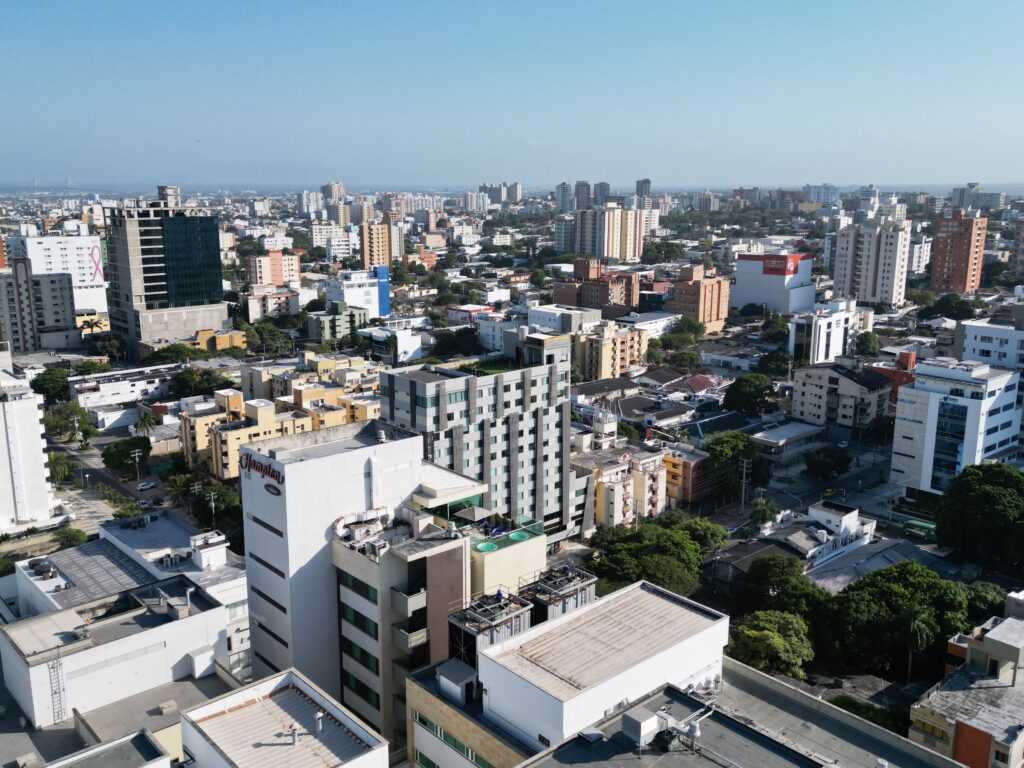
What is the process of buying property in Colombia?
It runs through a notaria and the public registry, not a US-style closing table, and your lawyer does the title work. The legal spine is the same for a resale or new construction. I filed each of these steps on my own purchase.
- Get your documents in order. A valid passport and a Colombian tax ID (NIT/RUT) from DIAN, plus proof of where your money comes from for the anti-money-laundering checks.
- Pull the Certificado de Tradición y Libertad. The registry document that shows the ownership history and any liens or debts on the property.
- Have a Colombian attorney run the title study on that certificate and the chain of ownership behind it. This is your due diligence. Do not skip it.
- Sign the Promesa de Compraventa, the binding promise-to-buy that fixes the price, the deposit, the timeline, and the penalties if either side walks.
- Move your funds in the right way. They enter through the official banking channel and are recorded as foreign investment on Formulario 4, the exchange declaration filed with the Banco de la República. This is the step people get wrong, and the visa section below explains why it matters.
- Sign the Escritura Pública before a notario, a neutral public official who authenticates the deed.
- Register the deed at the Oficina de Registro. Ownership transfers legally only at registration, not at the notary and not at handover. Then pull the updated certificate showing your name.
A straightforward resale runs about three to six weeks end to end. New construction is a different animal, because you start paying long before there is a deed to sign. The Superintendencia de Notariado y Registro oversees the notary and registry framework itself.
How do you pay for new-construction property in Colombia?
You are not paying a price at a closing table. You are entering a payment plan that runs across the whole build. A small reservation deposit holds the unit, then a long run of monthly installments funds the tower as it rises, then a large final payment comes due near completion.
That structure has real consequences. The deposit is smaller than a US down payment, but the promise-to-buy locks you in: miss the schedule badly enough and you can lose the contract and face a penalty. There is a balloon at the end, the biggest single number in the whole plan, so know that figure from day one and have a plan for it. And your payments sit in a fiducia, a regulated trust that holds buyer money and releases it to the developer as the project hits its milestones, including the pre-sale threshold that greenlights construction. That trust is a genuine protection, and it is part of why I was willing to buy off a model.
Here is a real advantage over the US that Americans do not expect: the installments carry no interest at all, because you pay the builder directly, not a bank. There is no mortgage and no years of interest stacked on top of the price. Fall behind and you owe a contract penalty, but not the running interest a US loan would charge. Pricing is also lowest at the very start, because a developer has to pre-sell a set share of the units before the trust releases funds, so launch prices climb once the building is moving. If you want the mechanics in full, see the guide to buying pre-construction property in Colombia.
How does the exchange rate change what you pay?
Your price is fixed in Colombian pesos, but you pay it over years from US dollars, so your dollar cost moves the entire time. Every installment converts at the COP/USD rate on the day you make it. The peso price stays fixed. The dollar total does not.
It can go either way. If the peso weakens against the dollar across your payment period, the remaining installments get cheaper in dollar terms and you win. If the peso strengthens, every remaining payment costs more dollars than you budgeted and you lose. On a multi-year plan with a large balloon at the end, that final payment is the most exposed, and it can land meaningfully higher or lower than the day you signed.
So budget for the bad version. Do not build your plan on today's rate holding for three years, because it will not. If you can only afford the purchase at a favorable rate, you cannot actually afford the purchase. How to move money in and out cleanly is covered in the Colombia money and banking guide.
Does a property purchase get you a Colombian visa?
Not automatically. Your money only counts toward the investor visa if it enters Colombia the right way and is registered as foreign direct investment. The builder told me that paying him directly would count. That was completely wrong, and believing it could mean buying the property and then not qualifying for the visa at all.
Here is the truth. For your purchase funds to count toward the investor visa, the money has to enter Colombia through the proper channel and be registered with the Banco de la República as foreign direct investment. That registration is what makes the funds count as national investment for visa purposes. Money wired straight to a developer, however large, is not automatically registered investment. Mine went through a brokerage and was registered correctly, but only because I checked and did not take the builder's word for it.
The person selling you the property is not the authority on what qualifies you for a visa. Confirm the registration with a Colombian immigration attorney and a competent financial professional before you move money, not after. The full picture, including the current threshold, is in the Colombia investor visa guide, and you can run your own numbers in the free Colombia visa and cost calculator, with the official terms on Cancilleria's visa page. This is also why I registered above the threshold on purpose. The bar rises every January with the minimum wage, the rate moves the dollar math, and a purchase right at the minimum can fall under the line later. A margin protects the visa the investment is meant to support.
How do you pick the right property to rent out in Colombia?
Pick for the view and the rules, not the height. A strong mid-level view rents as well as the top floor for less money, and you must confirm the building allows short-term rentals before you buy. These are the checks I run before I would put money into a rental unit anywhere on the coast.
- Watch the price between visits. When I first saw my project it was one price. By the time I came back to put down a deposit, it had risen and only a few view units were left. On new construction especially, every part of the deal has some give, so negotiate.
- Do not overpay for height. Go high enough for a genuine view, because the view is what rents the unit, but paying a premium for the very top floors mostly buys longer elevator waits. Guests will walk six or eight floors when an elevator is down; nobody walks nineteen.
- Protect the view in writing. A view you can see today is worth nothing if a tower goes up in front of it next year. Check the zoning and height limits on the lots between your building and the water, and confirm it with documents, not a salesperson's reassurance.
- Confirm short-term rental is allowed. If your plan is nightly rental, the escritura has to permit touristic use and the unit generally needs to be on the Registro Nacional de Turismo. Verify it for any building; not every one allows it.
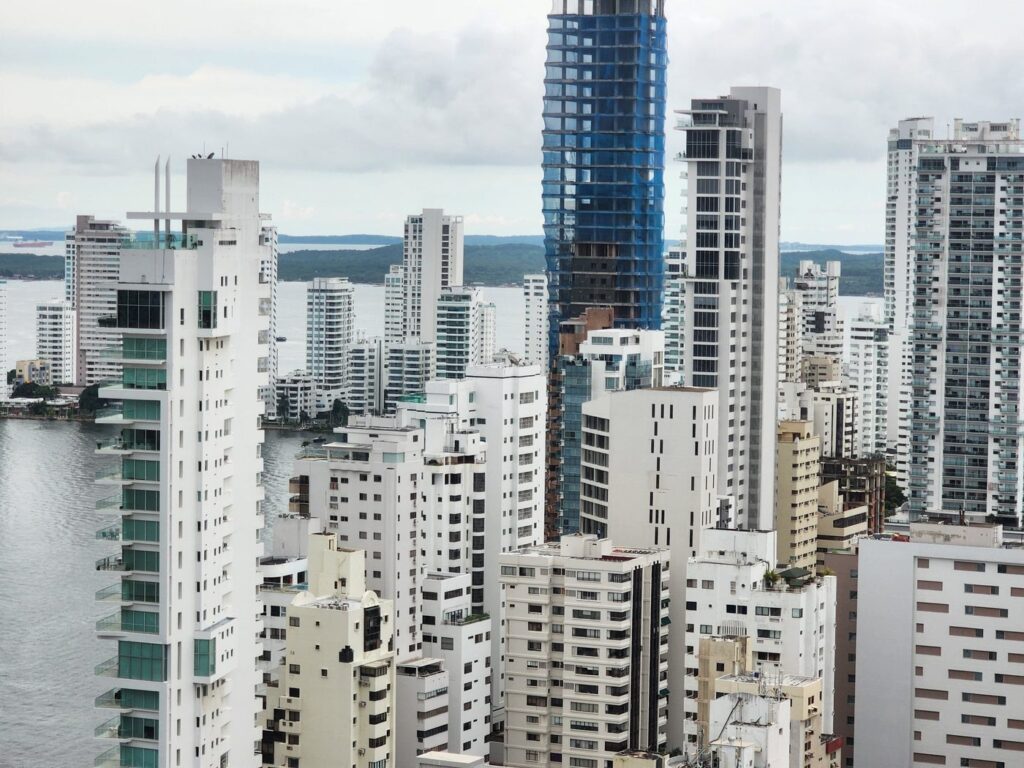
A new-construction unit here also arrives more bare than most Americans expect. Assume no upgrade packages, no built-in space for a dishwasher or an oven, and appliances on you. The recurring costs pleasantly surprised me: low insurance, low property tax, and reasonable administration fees. Still, confirm the real administration figure for your building before you sign, and see the real cost of living in Colombia for how those monthly numbers fit a full budget.
Where should you buy property in Colombia?
There is no single best city, only the one that fits your goal, your budget, and your appetite for risk. I have lived in six of them, and each has its own market, its own downside, and its own on-the-ground conditions the listings leave out. Start with the comparison, then read the city that fits you.
Santa Marta
The earlier, cheaper value play on the coast, with a water supply and a beach-erosion story to check before you buy.
Cartagena
The blue-chip: a UNESCO icon with deep rental demand, tightening rental rules, and real flood risk in Bocagrande.
Medellin
The best-known name and no longer a bargain, with an Airbnb crackdown and reliable utilities as the trade-off.
Barranquilla
Contrarian value next to Cartagena, where the thing to research is the flash-flood arroyos.
Pereira
Where I live now, in the coffee region: calm and buy-to-hold, where seismic build quality is the first due-diligence step.
Cali
The lowest big-city prices with the roughest reputation, so the safe corridors count for more than the sticker price.
Not sure which fits? Weigh them side by side in the guide to the best city to buy property in Colombia. If you are still deciding whether to buy at all, start with the broader guide to investing in Colombia or the free Colombia Field Guide.
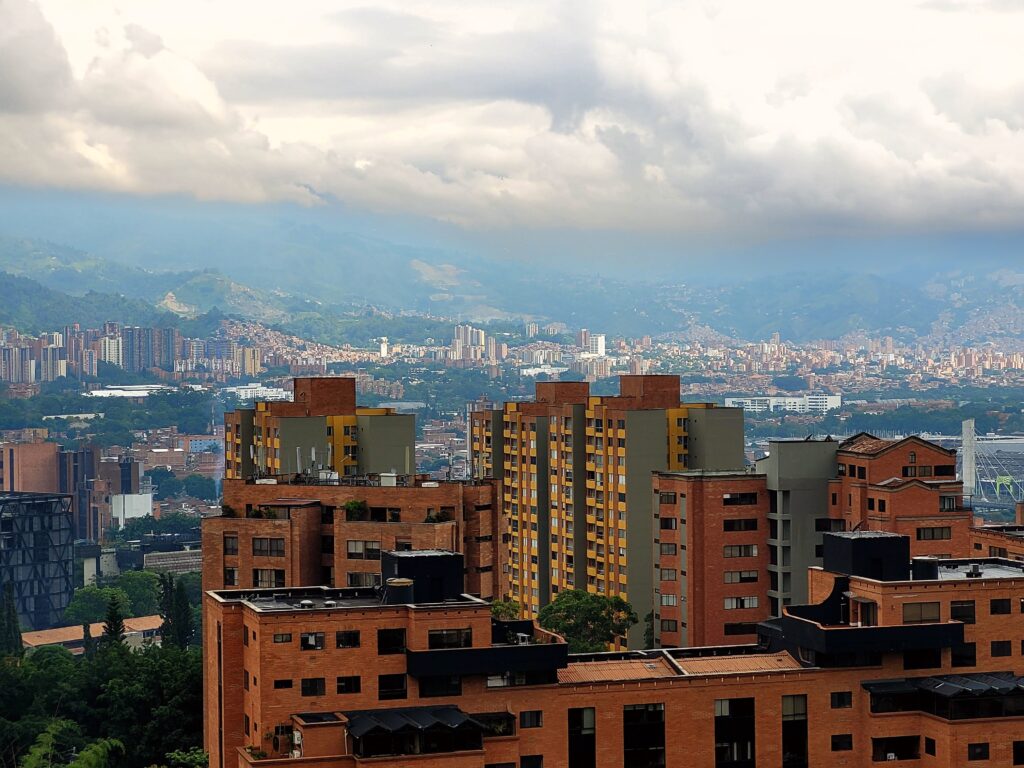
What are the risks of buying property in Colombia?
There are five real risks: no legal safety net, currency swings on a peso price, developer delay, no mortgage for most foreigners, and a visa that only counts if the money was registered right. None of them makes Colombia a bad place to buy, and I did it, but each one is only avoidable if you plan for it.
- No safety net. No title insurance, no US-style escrow, no MLS, no standardized agent licensing. Your due diligence is the protection.
- Currency risk. A peso-priced purchase funded in dollars, especially a multi-year new-construction plan, costs an amount that moves the whole way through and can move against you.
- Developer risk. New construction can stall, slip its delivery date, or be slow with documents. A verified builder and a fiducia holding your payments are what contain it.
- Financing risk. Most foreigners cannot get a Colombian mortgage, since bank lending here effectively requires residency and local credit, so non-residents are largely cash buyers. If your plan needs a loan, confirm it before you send a deposit.
- Visa risk. The investor visa credits a purchase only when the funds were registered as foreign investment, and a property bought at the bare minimum can slip under the bar later. Both are avoidable if you plan for them.
Get the free Colombia starter guide
Buying is one decision of four, and the free Field Guide is the other three in one place. It covers what a month really costs in each city, which city fits which person, and what to have in hand before you fly. It is the plain-English orientation I wish someone had handed me in 2020.
No cost. Unsubscribe anytime.
Buying property in Colombia: FAQ
How much does it cost to buy property in Colombia?
It depends on the city and the property, but plan for more than the sticker price. On top of the purchase amount, buyer closing costs add roughly 3 to 4 percent, most of it registry, and a new-construction unit needs a furniture-and-fit-out cushion on delivery. If the purchase is meant to support an investor visa, it must also clear the current threshold. Prices are set in pesos, so your dollar cost shifts with the COP/USD rate the whole way through.
Are Americans allowed to own property in Colombia?
Yes. The 1991 Constitution puts a foreign owner on essentially the same footing as a Colombian one, and the deed goes in your own name. No special permit is needed for a standard apartment or house. Restrictions apply only to border zones and certain coastal land. The purchase produces a public deed naming the foreign buyer as sole owner.
What are the steps to buy a property in Colombia?
Select the property, then obtain the Certificado de Tradición y Libertad to check ownership and liens. Sign a Promesa de Compraventa, sign the Escritura Pública before a notary, and register the deed at the public registry. Ownership transfers only on registration. A resale takes roughly three to six weeks; new construction runs far longer because you pay across the build.
Is there title insurance or escrow when buying property in Colombia?
No. There is no title insurance and no US-style escrow, and agents are not state-licensed. Your protection is a proper title study of the registry certificate, a bilingual real-estate attorney, and, for new construction, a fiducia trust holding the buyer payments. The system works, but only if you understand it before money moves.
How do you pay for an off-plan apartment in Colombia?
You buy it on a schedule, not at a closing table: a deposit, then monthly payments held in a fiducia trust while the tower goes up, then one big balance at the end. The price itself is fixed in pesos, so what you pay in dollars moves every month you are paying it. Know the balloon figure from day one.
Does buying property in Colombia get you a visa?
Not automatically. A purchase supports an investor visa only if it meets the threshold and the funds were logged as foreign direct investment at the Banco de la República. Paying a developer directly, unregistered, does not count, regardless of what the seller says. See the investor visa guide.
Can a foreigner get a mortgage in Colombia?
Usually not. Colombian banks treat legal residency, an M or R visa with a cedula, and local credit history as effectively required, which shuts out most people here on a tourist stamp. Where foreigners do get a loan, expect a 50 to 70 percent loan-to-value cap and peso-loan rates that run high. Most foreign buyers pay cash or finance from their home country.
Sources
The ownership rules, the buying steps, and the cost ranges are Colombian real-estate guidance confirmed against my own purchase. Money enters as foreign investment, logged with the Banco de la República on Formulario 4. Deeds are recorded through the Superintendencia de Notariado y Registro, the tax ID comes from DIAN, and the investor-visa terms are published by Cancilleria. Figures are directional and were current around September 2026 at roughly 3,173 COP/USD; verify current prices and the rate yourself. Reviewed September 23, 2026.
Where do you want to start?
Most readers land here at one of three stages. You are weighing whether Colombia is a smart buy, buying partly to qualify for the investor visa, or already staring at a specific unit and its paperwork. Each path below picks up where you are, so start with the one that fits.
- Still deciding whether Colombia is a good buy, or which city. The city-by-city comparison scores them side by side, and the Colombia Property Buyer's Guide ($67) is the full evaluation method: builders, payment plans, exchange-rate exposure, resale, and exit.
- Buying partly for the investor visa. The investor visa guide has the current numbers and the foreign-investment registration that decides whether your purchase qualifies.
- Already have a specific property in front of you. A Ready Call ($197) is a focused review of your exact building, block, numbers, and paperwork before you lock into a contract.
Book a 1-on-1 Colombia call ($197) Get the free Colombia guide
Money back on the call: if it was not worth it, I refund it, no questions.
- Promesa de Compraventa
- The binding promise-to-buy contract that fixes price, deposit, and timeline before the deed.
- Certificado de Tradición y Libertad
- The registry's record of who owns a property and what debts or limits sit on it.
- Fiducia
- A regulated trust that holds buyer payments on new construction and releases them to the developer against milestones.
- Cesion
- Transferring a pre-construction contract, and the payments made against it, to another buyer before delivery.
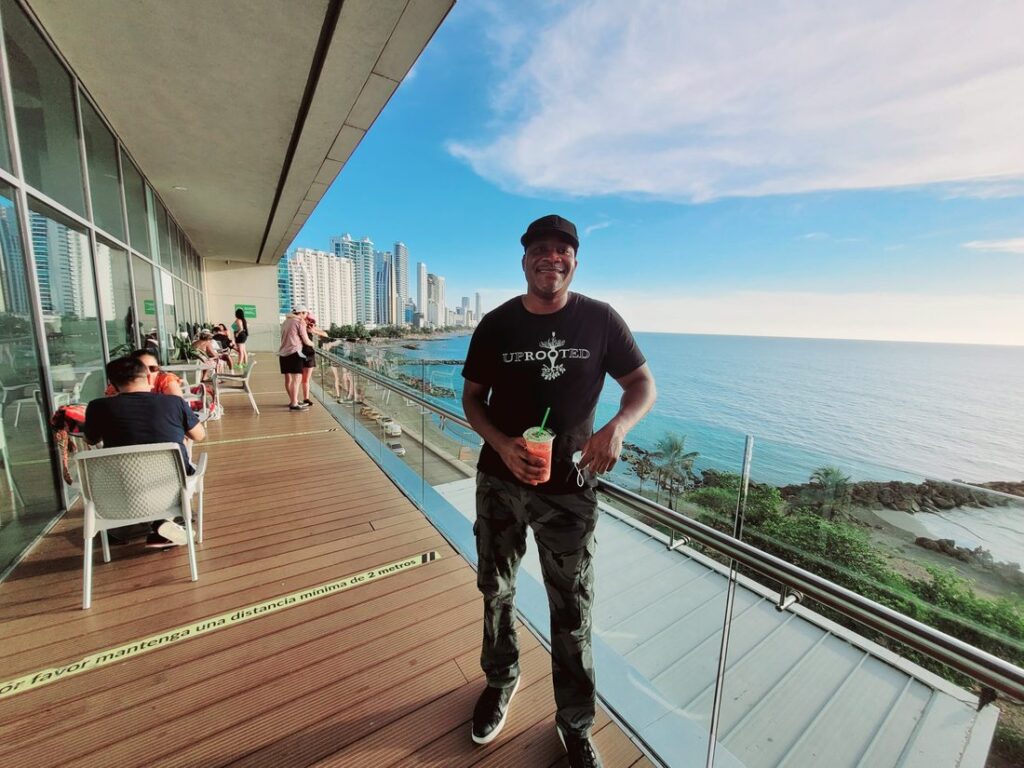

Shep moved to Colombia and has lived here for six-plus years, across six cities: Cali, Medellin, Barranquilla, Cartagena, Pereira, and Santa Marta. He bought his own property here and writes GeoGringo to give Americans the honest version of moving abroad. He is not an attorney, an accountant, or a real-estate agent; his job is helping people plan a safe move.
Disclosures and disclaimer
This is general information from my own experience, not legal, tax, or financial advice. Reviewed September 23, 2026. Property markets and rules change, and no page removes the risk in a purchase. I am not a lawyer, an accountant, or a licensed agent, and I hold no license in any of those fields, so read the current rules yourself and engage a qualified Colombian real-estate attorney and a contador for anything that depends on the law or your taxes. Figures are directional, at roughly 3,173 COP/USD as of September 2026, and are not a quote; verify current prices and the rate before you act.
GeoGringo · Buying Property in Colombia as an American · v20 · reviewed September 23, 2026


